
Do Microfiber Sheets Shed Microplastics? What the Research Actually Says
7 November 2026
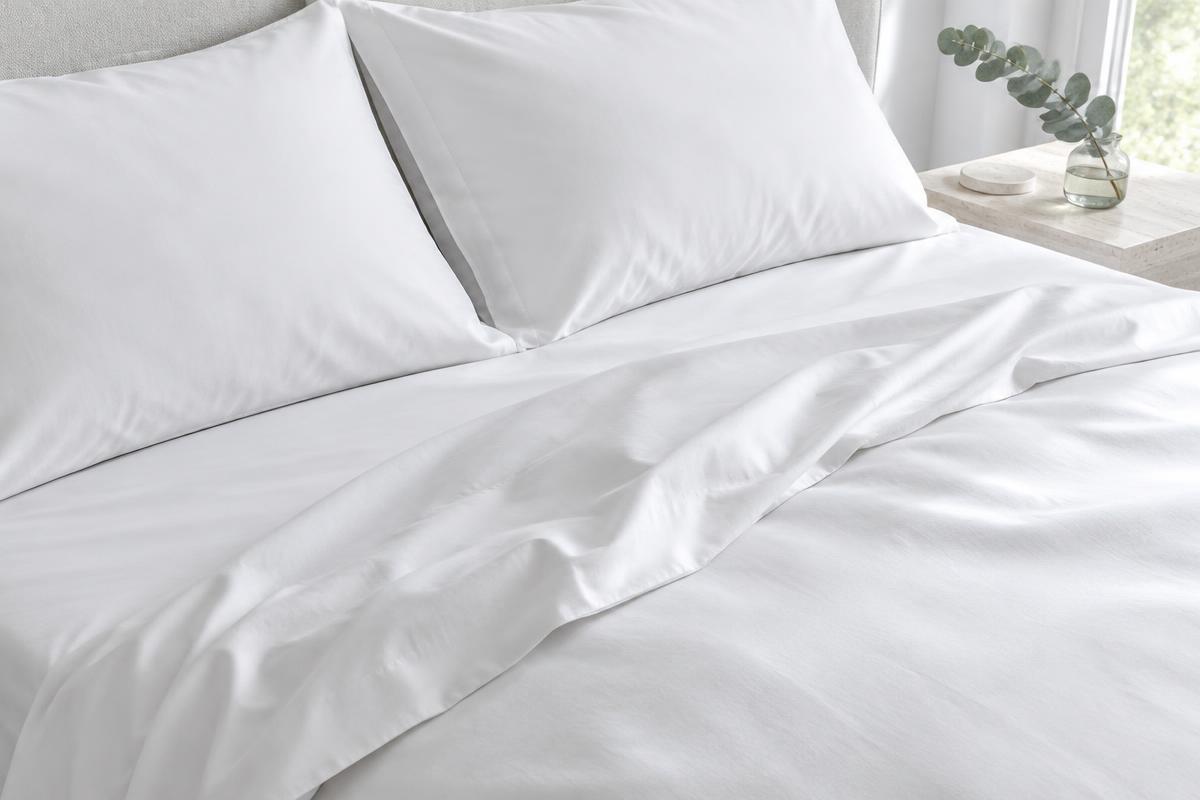
Most people choose microfiber sheets for the price and the smooth, wrinkle-free feel. Very few people stop to ask what microfiber actually is. The short answer: it is plastic. Microfiber is made from ultra-fine polyester or nylon fibres, and like every synthetic fabric, it sheds tiny plastic fibres over time.
So if you spend around a third of your life lying on it, it is worth knowing what that means.
What "microfiber" really means
"Microfiber" sounds soft and harmless, but the word describes the size of the fibre, not the material. The fibres are spun from petroleum-based plastics, mostly polyester (PET, the same plastic used in drinks bottles) and sometimes nylon. That is what makes microfiber cheap, quick-drying and resistant to creasing.
It is also why microfiber behaves so differently from cotton when it comes to heat, sweat and what it leaves behind.
Do microfiber sheets shed microplastics?
Yes. Researchers have been measuring this for years, mostly by testing what comes off synthetic fabrics in the washing machine:
- A study from the University of Borås in Sweden tested polyester, nylon and acrylic fabrics and found that all of them shed fibres. Looser constructions and worn fabrics shed more.
- Italian researchers estimated that a single 5 kg wash load of polyester fabric can release over six million microfibres, depending on the detergent used.
- Other washing studies found that shedding increases with higher water temperatures and with detergent, which is exactly how most people wash their bedding.
Sheets are washed often and at warm temperatures, so they are among the textiles washed hardest in any home.
It is not just the washing machine
Plastic fibres do not only escape down the drain. Synthetic textiles also shed through everyday friction: tossing and turning, pulling the sheets up, making the bed.
A 2025 study published in PLOS One sampled the air inside homes and cars in France. The researchers estimated that adults may breathe in around 68,000 tiny microplastic particles a day from indoor air, and pointed to the breakdown of household textiles, carpets, curtains and furniture as likely sources. The study used a small number of samples, and the plastics industry has questioned its methods, so the exact figure should be treated with care. But it adds to a growing body of research showing that indoor air, where we spend most of our time, contains more microplastics than outdoor air.
Your bedroom is where you spend the longest stretch of time indoors, with your face pressed against fabric for hours.
Is this harmful to your health?
The honest answer is that scientists do not know yet. Microplastics have now been found in human blood, lungs and other tissues, and researchers are actively studying what long-term exposure might mean. Until there are clearer answers, many people are choosing simply to reduce how much plastic they live and sleep with, starting with the things they touch every day.
We are not doctors, and we will not claim that changing your sheets will change your health. What we can say is that choosing a natural fibre removes one plastic source from your bedroom completely.
What about cotton?
Cotton sheets shed fibres too. That is the lint in your dryer. The difference is what those fibres are made of. Cotton is a plant fibre (cellulose), not plastic. It does not contain polyester or nylon, and cotton fibres break down naturally rather than lingering in the environment for decades.
Cotton also has advantages that matter in the UAE:
- Breathability: cotton lets heat and moisture escape, so it sleeps cooler than microfiber, which tends to trap heat. That is a big deal when it is still 30°C outside at night.
- Sweat handling: cotton absorbs and releases moisture. Microfiber tends to hold sweat and body oils, which can lead to odours over time.
- It gets better with age: good cotton softens with every wash, while microfiber tends to pill.
For the full comparison, read our guide: Are Microfiber Bed Sheets Good or Bad? (And Why Cotton Still Wins).
How to reduce microplastics in your bedroom
- Choose natural fibres for the things you sleep on. Sheets, pillowcases and duvet covers in pure cotton or linen are the easiest change to make.
- Check the label. "Microfiber", "polyester", "poly-cotton" and "brushed microfibre" all contain plastic. "100% cotton" does not.
- Wash cooler and fuller. Washing studies show synthetic fabrics shed more in hot water. Fuller loads also mean less friction per garment.
- Air your bedroom. Opening windows when the weather allows, or running a HEPA air purifier, helps clear airborne particles.
- Replace worn synthetics first. Older, worn synthetic fabrics shed more than new ones.
The bottom line
Microfiber sheets are made of plastic, and plastic fabrics shed plastic fibres, in the wash and in the air around you. The health effects are still being researched, but if you want to cut down on the plastic you sleep in every night, switching to pure cotton is the simplest place to start.
RocketLinen sheets are made from 100% pure long-staple cotton in a 400 thread count sateen weave, certified free of harmful substances, and sized for UAE beds. Shop pure cotton bed sheets with same-day delivery in Dubai and next-day delivery across the UAE.
FAQ
Are microfiber sheets made of plastic? Yes. Microfiber is made from very fine polyester or nylon fibres, which are both plastics.
Do cotton sheets shed microplastics? No. Cotton sheets shed some lint, but cotton is a plant fibre, not a plastic, so its fibres are not microplastics. Poly-cotton blends do contain plastic.
Does washing microfiber sheets release microplastics? Yes. Studies of synthetic fabrics show that washing releases large numbers of fibres, and that hot water and detergent increase shedding.
What are the best sheets to avoid microplastics? Sheets made from 100% natural fibres such as cotton or linen. Check the label for polyester, microfiber or poly-cotton blends.